Build a railroad
across the real America.
Waybill is a game of strategic railroading played on the country as it was surveyed: real cities seeded from their census, corridors that follow the water and fight the mountains, and an economy where railroads must deal with one another to move anything at all. Worlds open in 1830 and run, season by season, into the modern era.
Play free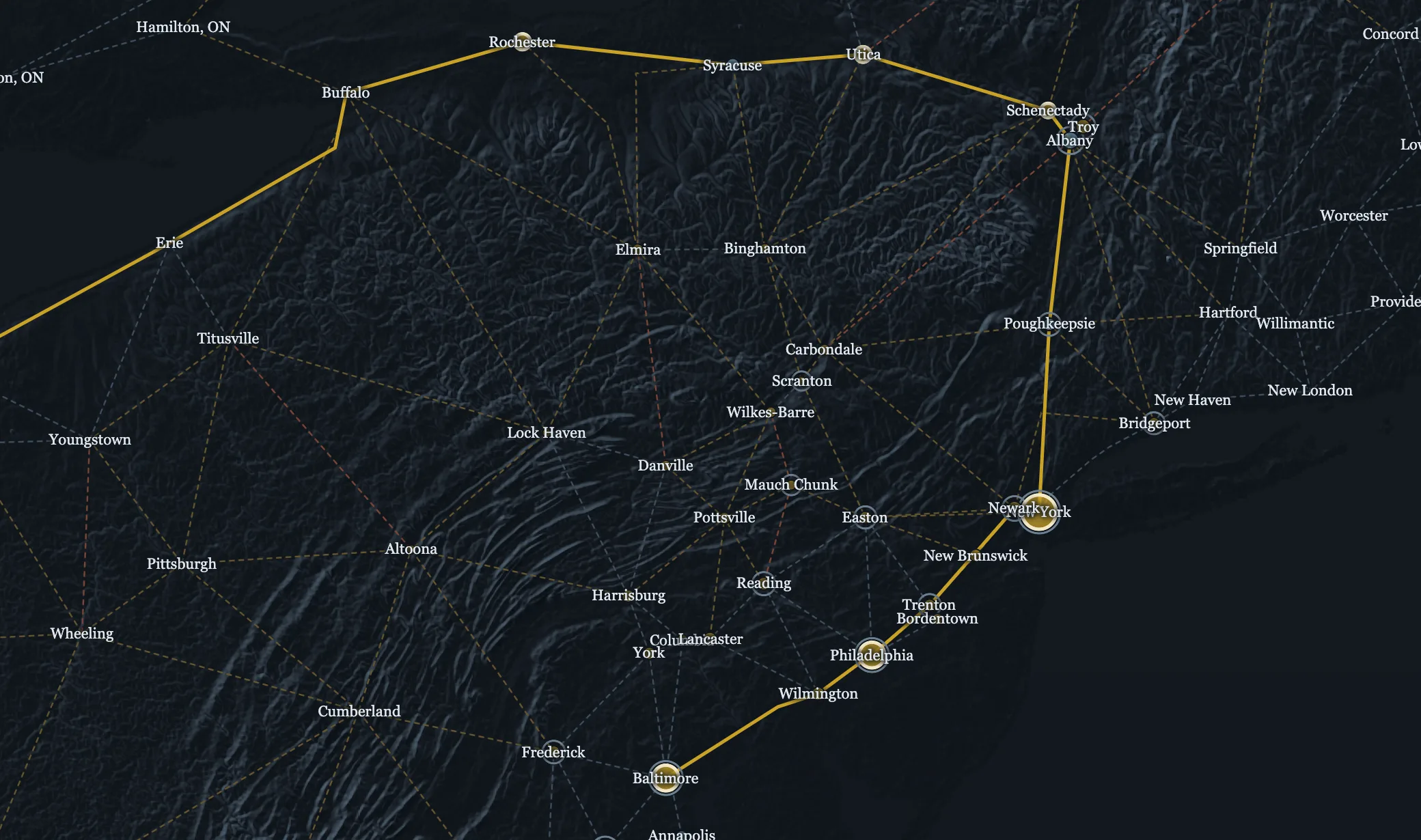
The board from tidewater to the lakes. Every corridor is surveyed against the terrain under it — the doglegs are where the country made the engineers bend.
The map is not a metaphor.
No hex grid, no invented continent. Waybill plays on American terrain with the numbers left honest — which makes the route you choose the first strategic decision of the game, exactly as it was in 1830.
- Cities with their census in them. Every town on the board is a real place at its real size, and it grows the way the record says it grew. Where the people are is where the freight is.
- Surveyed corridors, honest ruling grades. A line over the mountains is shorter and dearer on every ton; the water-level route is long and cheap. The profile of the land is in the operating ratio.
- History arrives on schedule. Decade by decade the frontier opens: new towns, new regions, new locomotive classes entering service the year they entered service. A world’s late joiners get a fresh country to claim.
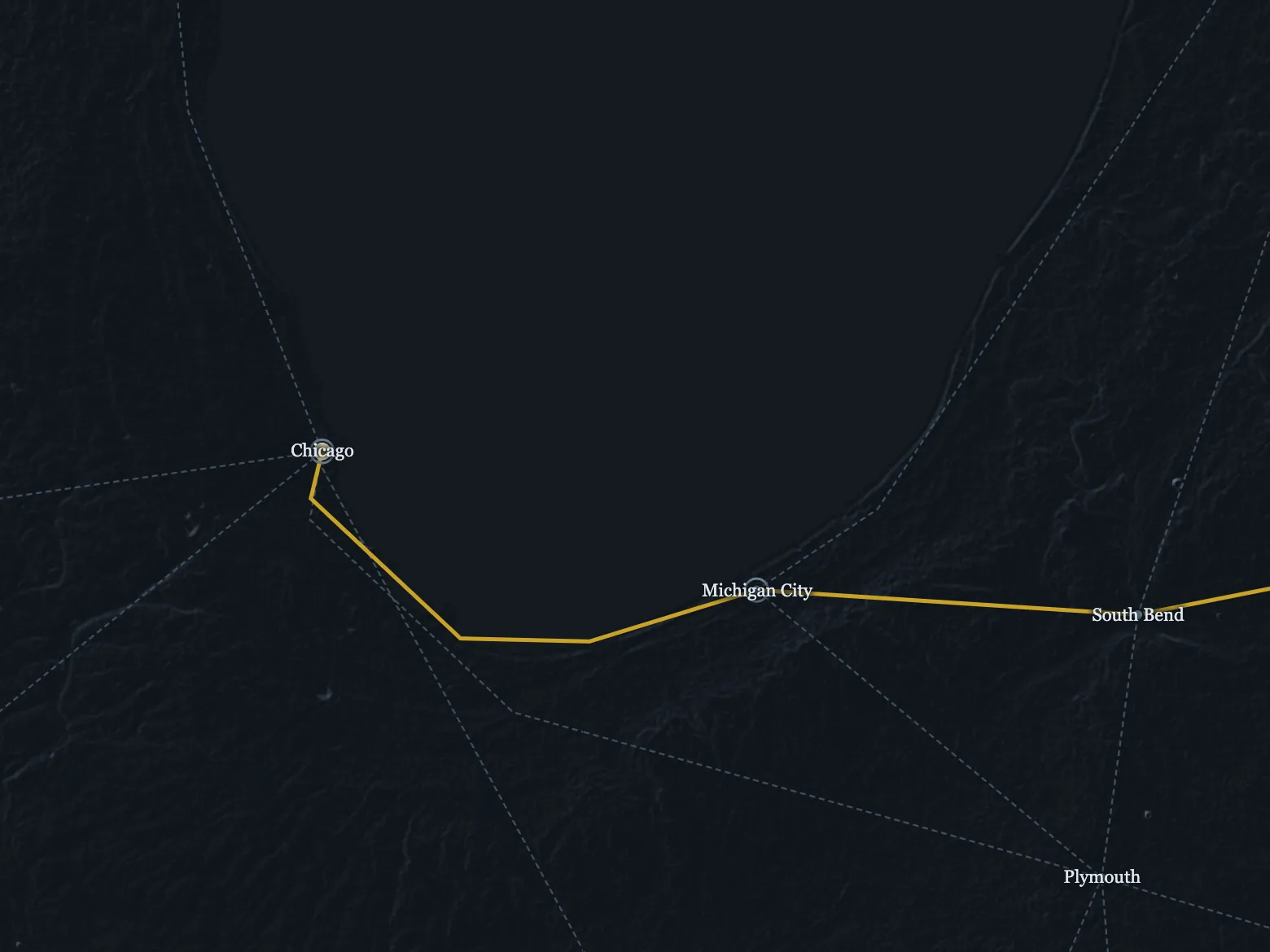
At the foot of the lakes, where the roads that own the water meet the roads that own the interior.
No railroad serves the whole map alone.
The game is named for the document that follows a shipment across railroads. Interchange is the distinguishing mechanic: freight is handed from road to road at shared hubs, and the revenue splits by the leg each road actually hauled. Your rivals are also your partners — on terms everyone can read.
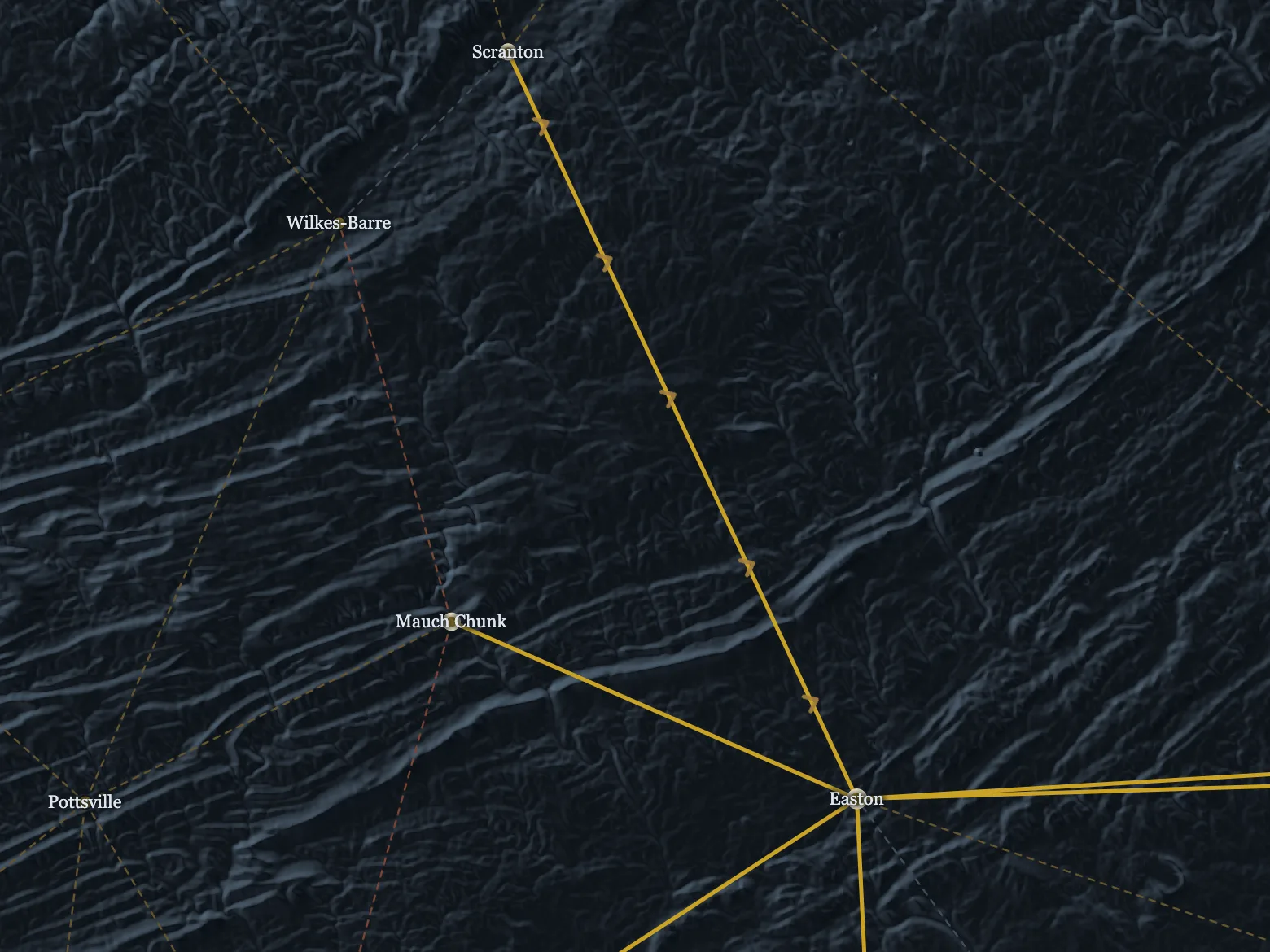
Anthracite country, close in. The chevrons tick the steep miles — a ruling grade is a cost you can read off the board — and every hub where roads meet is a door for interchange.
- Posted prices, not private deals. Tariffs, trackage rights, station-use rates — every rate is published and takes effect at a click. Nothing to negotiate in the shadows; everything to out-price.
- A full stock market. Shares, dividends, buybacks, new issues. Your railroad has a book value and a float, and both are somebody else’s opportunity.
- Barons and hostile takeovers. Accumulate a rival’s paper quietly, seize the board seat, run the road yourself — or spin a branch off into a new charter and sell it to the public. The map is only half the game.
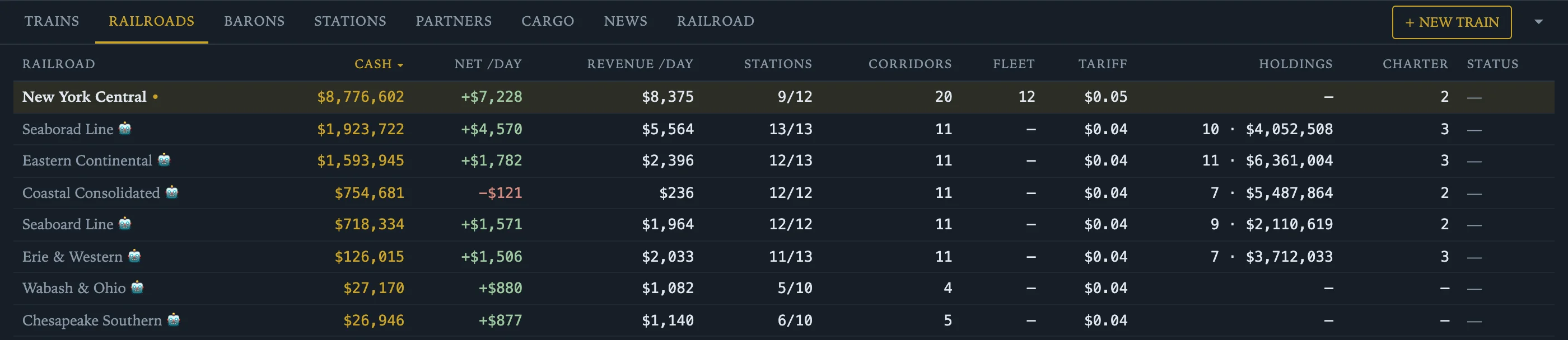
The standings, for the spreadsheet-keepers. Every road’s book is public — revenue, operating ratio, dividend — because a market is only fun when you can read it.
Three doors in. All of them open today.
Worlds run continuously, and the lobby always has one with room. There is no queue and no season reset to wait for — pick a door and you are in the game in minutes.
Found a railroad
Charter a new road in a young world or on freshly opened frontier. Pick the city, drive the first survey stakes, and put your name on the letterhead.
Take over a struggler
Somewhere on the board a railroad is failing. Take the seat, inherit its stations, its locomotives and its debts — and be the management it deserved.
Buy your way in
Arrive as an investor. Build a position share by share, collect the dividends, and when the votes are yours — take the whole road. No track required.
Late to a world is not locked out of it. The frontier keeps opening on history’s schedule, so a world deep in the 1880s still has unclaimed country — and struggling roads — for a newcomer to make a name on.
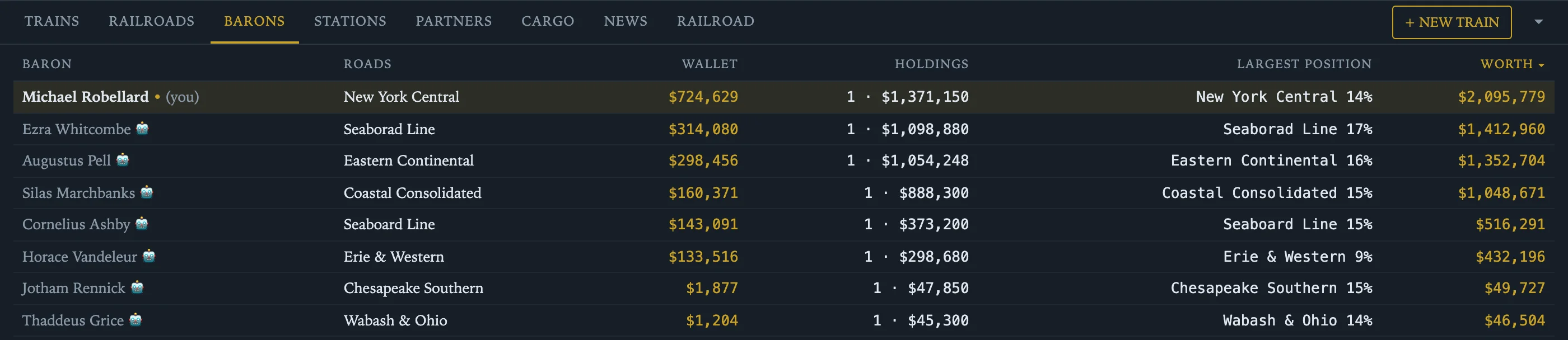
The barons board. Behind every railroad stands a proprietor with a wallet of his own — and a worth the whole world can read.
Built like the morning paper, not the slot machine.
Construction takes seasons: a corridor is surveyed, graded and laid while the world turns, and your trains earn while you are away. Check in daily — read the news, adjust a tariff, order a locomotive, answer a rival’s move — the way you would read the morning paper. A world runs for months of real time, 1830 to the modern era, and the roads that win are the ones run with patience.
No pay-to-win. Ever.
Waybill is free to play, and the only currency in the game is the dollar your railroad earns. No boosts, no skips, no premium locomotives, no bought advantage of any kind — a standings board means nothing if a seat at the top can be purchased. This is a principle, not a promotion.